user profile

Last Updated : Aug 04 2025

Pathways Housing Wellness Corporation

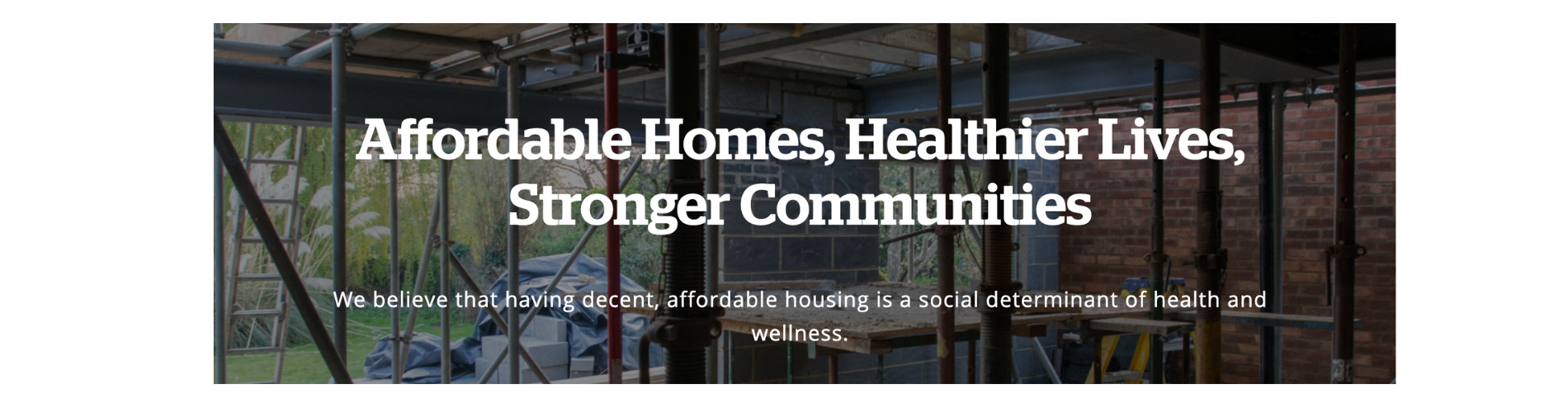
Pathways Housing Wellness Corporation (PHWC) is a nonprofit affordable housing developer that aims to improve health outcomes for low-income people in Philadelphia by pairing safe, secure, and affordable housing with high-quality wrap-around services.

  • Enterprise
  • Opportunity

We know that homelessness drops one’s average life expectancy to 50 years, down from a non-homeless average of about 78 years, primarily due to chronic and infectious illnesses and lack of access to care. Our overarching goal is to improve health of low-income Philadelphians, particularly those experiencing homelessness and those who are disabled. Housing is a well-known social determinant of health. Research shows that the following four characteristics of housing affect health outcomes:   

  1. Stability: Presence of stable housing improves health; unhoused people die 20 to 30 years earlier than those who are housed.   
  2. Safety and Quality: Environmental factors within homes, such as lead exposure, water leaks, poor ventilation, dirty carpets, and pest infestation are correlated with poor health outcomes.   
  3. Affordability: A lack of affordable housing options can affect a family’s ability to pay other essential expenses, such as food and medical care, which has a direct impact on health.   
  4. Neighborhood: Access to public transportation, grocery stores with nutritious food, and safe spaces to exercise are all correlated with improved health outcomes.   
PHWC addresses the need for both affordable housing and improved health outcomes in the city through an innovative, holistic, two-pronged approach:  
  • Develop stable, quality, affordable housing in central neighborhoods in Philadelphia, reserving at least 30% of the units for people experiencing homelessness or at risk of homelessness: PHWC is committed to developing housing that is truly affordable for extremely low-income people in Philadelphia, meaning that no resident will pay more than 30% of their income on rent, even if their income is $0. PHWC is also committed to prioritizing quality over profit, ensuring developments have energy efficient appliances, quality overhead lighting, access to internet, and designs that fit the history of the neighborhood. Because we are not driven by profit like other developers, we can afford to center our constituents and provide truly affordable, quality housing for low-income Philadelphians.  
  • Provide high quality wrap-around services to tenants to provide support for behavioral and physical health needs: 30% of the units in PHWC’s housing developments are designated for people experiencing homelessness or at risk of homelessness. PHWC partners with Pathways to Housing PA (PTHPA) to provide behavioral health and medical services to these individuals to address illnesses, substance use disorders, and behavioral health challenges. PTHPA has over 15 years of experience providing services to this population in Philadelphia.  
This approach sets PHWC apart from other housing developers because it prioritizes the health and well-being of its constituents. Unlike for-profit developers, PHWC sets rents according to need, rather than the limitations of the Low-Income Housing Tax Credit (LIHTC), which require rents to be set based according to the local Area Median Income (AMI). Philadelphia’s AMI is based on incomes in 11 counties spanning four states, including Bucks County, Chester County, and Montgomery County in Pennsylvania. In 2024, the AMI for a family of four based on the average of these 11 counties is $114,400. However, this does not reflect the AMI in Philadelphia alone, which is much lower: $60,302 in 2023, according to the US Census.  

Deeply affordable housing is defined as affordable for 60% AMI or lower. For a family of four in 2024, that means that rent in an affordable building could be as high as $1,943 per month. In Philadelphia, where 43% of households make under $50,000 and 20.3% of people live under the federal poverty line, even these “affordable” homes are unattainable. On top of this, for-profit affordable housing developers who receive funding through the LIHTC are only required to rent units at affordable rates for 30 years, meaning that developments built before 2000 are now aging out of their affordability requirement. 

The result is “affordable housing” that is unaffordable for most Philadelphians, and therefore ineffective at closing the widening housing gap. PHWC will fill unmet needs in its community because it will attempt to close that gap by developing housing that is truly affordable to very low-income Philadelphians, regardless of income. 

Business profile
Primary contact
Taylor De La Pena
Headquarters
Philadelphia, Pennsylvania, United States
Type of entity
Not-for-Profit
Diversity, Equity, and Inclusion
Women led
Launch year
2020
Team size
1-10
Sectors & themes
Real estate, Affordable quality housing
  • Problem
  • Solution
  • Product / service
  • Projected impact
  • Vision & strategy

Problem

Philadelphia faces an affordable housing crisis. According to Pew Charitable Trust, nearly 49% of Philadelphia households spent at least 30% of their income on housing costs in 2023, meaning they met the federal standard of being cost burdened. To add to that, 69% of cost-burdened Philadelphia households have incomes below $30,000 per year. Affordable housing is significantly more difficult to find for low-income families, especially those who are not white: 50% of Hispanic households and 46% of Black households are cost burdened, compared with 32% of white households.     
 
In the zip code 19121, where PHWC’s first development project will be built, 30-41% of households live below the poverty level, representing the highest percentage in the city. Health outcomes in this neighborhood are among the worst in the City. According to the City of Philadelphia’s Health of the City report, the life expectancy of people living in the 19121 zip code is among the lowest: 62-65 years for men, 72 to 75 for women – far lower than the national average life expectancy of 77.5 years. Childhood asthma emergency department visits in this zip code were also the highest in the city: between 422 and 933 visits per year. 
 
PHWC also serves those who are at risk of homelessness or are experiencing homelessness. According to the Philadelphia Office of Homeless Services Point-In-Time Count, homelessness increased for the third year in a row in 2024, with a total of 5,191 individuals experiencing homelessness. Almost a third of the people surveyed reported a serious mental illness and 24% said they had a substance use disorder. According to the National Alliance to End Homelessness, people experiencing homelessness have worse health outcomes - in 2023, 31% of the homeless population reported having a serious mental illness, 24% reported conditions related to chronic substance use, and nearly 11,000 people had HIV/AIDS. Studies report homeless adults to be 40-50% more likely to die of heart disease than adults with stable housing. In Philadelphia, the leading cause of death among people experiencing homelessness between 2016 to 2018 was drug related (59%), followed by cardiovascular disease (16%). In 2022, Philadelphia experienced more than 1,400 unintentional drug overdose deaths, which represented the largest number on record. 
 
There is a clear and urgent need to address not only the shortage of affordable housing, but also the dire health outcomes experienced by those living below the poverty line in Philadelphia. Our goal is to support low-income Philadelphians, 30% of whom are experiencing homelessness or at risk of homelessness, by providing affordable housing and high-quality wrap-around services, including medical, psychiatric, and treatment services. PHWC believes that providing affordable housing in conjunction with service provision will improve health outcomes in the communities we serve. 

Solution

Research shows that providing stable, affordable, and safe housing in vibrant communities improves health outcomes. Our theory of change is: if we provide safe, affordable, stable housing to low-income people (at least 30% of whom are experiencing homelessness or are at risk of homelessness) paired with high-quality wrap around services to address physical and behavioral health issues, health outcomes in the communities we serve will improve. 

Product / service

In 2024, after two years of pre-development work, we funded the first phase of our first development project: the 17th Street Community Corridor. The first phase of the project consists of two three-story apartment buildings consisting of 40 total units. Building A will offer the community 17 one-bedroom units and 2 two-bedroom units. Building B will offer the community 19 one-bedroom units and 2 two-bedroom units. 10 units between both buildings will be fully ADA compliant, and all units will be visitable for people with physical disabilities. The project has been awarded significant funding by the City of Philadelphia, the Federal Home Loan Bank of Pittsburgh, and the 9% Low-Income Housing Tax Credit Program. Additionally, the project has been awarded Project-Based Vouchers under PHA’s Faircloth to RAD program, meaning that no tenant will have to pay more than 30% of their income for rent, even if their income is $0.  
 
Construction on the first phase of the project is estimated to begin in summer 2025, with an eventual completion date of late 2026 and units available for lease in early 2027.  

Vision & strategy

As a nonprofit developer, we are well situated to develop truly affordable housing for those most in need. We are not beholden to the same revenue goals of a for-profit developer. We build housing that is not only deeply affordable, but also well-designed and built to last in communities most in need. In our developments, we pledge to:  

  • Focus on true affordability, meaning tenants pay no more than 30% of their income on housing, even if their income is $0.   
  • Combat digital redlining, the practice of creating or perpetuating inequities through lack of access to the internet and other technology, by ensuring the internet is accessible to all tenants.  
  • Use green resources to reduce both energy use and cost.  
  • Ensure adequate light throughout our units and, when possible, install ceiling fans.  
  • Provide appliances that are energy efficient and good quality.  
  • Build storage solutions so individuals and families have adequate space to store their belongings.  
  • Pursue designs that fit the existing character of the neighborhood.   
  • Remove as many barriers to obtaining housing as possible, including poor or nonexistent credit history, criminal history, past evictions, and poor rental history.  
  • Engage the community in the development of our projects to ensure our developments foster community rather than dividing it. 

Leadership
Our story
Pathways Housing Wellness Corporation (PHWC) was founded in 2020 by Pathways to Housing PA, a well-respected agency that aims to end chronic homelessness in Philadelphia. Pathways uses a Housing First model, providing homes without preconditions then addressing underlying issues around mental health, substance use, medical care, and education. PHWC was born out of a growing need for affordable housing in the city, not only for Pathways program participants, but for all low-income Philadelphia residents. 

In 2024, after two years of pre-development work, we funded the first phase of our first development project: the 17th Street Community Corridor. The first phase of the project consists of two three-story apartment buildings consisting of 40 total units. Building A will offer the community 17 one-bedroom units and 2 two-bedroom units. Building B will offer the community 19 one-bedroom units and 2 two-bedroom units. 10 units between both buildings will be fully ADA compliant, and all units will be visitable for people with physical disabilities. The project has been awarded significant funding by the City of Philadelphia, the Federal Home Loan Bank of Pittsburgh, and the 9% Low-Income Housing Tax Credit Program. AmeriHealth Caritas and Temple Hospital are partnering with cash contributions toward development, under PHFA’s Health for Housing Investment Program. Additionally, the project has been awarded Project-Based Vouchers under PHA’s Faircloth to RAD program, meaning that no tenant will have to pay more than 30% of their income for rent, even if their income is $0. Construction on the first phase of the project is estimated to begin in summer 2025, with an eventual completion date of late 2026 and units available for lease in early 2027.  

Despite the long lead time and immense effort required to develop affordable housing, PHWC is already working on funding for Phase II and Phase III of the 17th Street Community Corridor project. In September 2024, we hired our first full-time staff person, whose main responsibility is to support the ongoing development and construction efforts for all PHWC projects.

We'd love to talk with you

 
Contact
Website
http://www.pathwayshwc.org
Email address
info@pathwayshwc.org
Telephone
215-390-1500
Address
5201 Old York Road, Philadelphia, Pennsylvania, 19141, United States
Country
United States
LinkedIn
https://www.linkedin.com/company/105222079/admin/dashboard/
Facebook
https://www.linkedin.com/company/105222079/admin/dashboard/

Join OptImpact

Join OptImpact to learn more about this enterprise and discover other opportunities.

Email:
Location:
Phone:

Biography

Get Full Access

Log in or sign up to access full details of this investment opportunity, explore all network content, and connect with other members of the community.

Login Sign up
Learn more about OptImpact
Help articles
  • How to request access to a diligence process underway?
  • What does closing diligence mean?
  • How do I customize templates?
  • What if I don’t want to use these templates?
  • How can I control who sees my templates?
  • How do I signal investment commitment?
  • How do I invite other people to the 'deal table'?

How to request access to a diligence process underway

Investor users can see, where peer investors allow, when a diligence process is underway or completed. When this is the case, users may contact the organization who leads the diligence process directly, or specifically request access to the diligence process underway in the event that those leading may be keen to include prospective coinvestors or collaborators. This ‘request’ functionality is visible only to investors.

Third parties or other user types may be invited directly to a diligence process by a lead investor by clicking on the “Invite” button on the Diligence tab. Once they accept, these users will have access to the diligence process including a shared Q&A area, a document repository, and a diligence-specific chat area.

What does closing diligence mean

Closing diligence means that an appraisal process led by a prospective investor of an organization seeking debt, grant or equity has been terminated. This may or may not mean that a diligence has effectively been completed; an investor may close said process at any time without further notification of next steps. This effectively closes the Diligence ‘table’ that has been opened and managed by a lead prospective investor. This also closes the process for any other investors or invitees to the ‘diligence table’, regardless of where they have been in the process.

How do I customize templates

In order to customize templates, a Master Administrator can go to the Diligence menu item on the left hand menu of the dashboard, and select ‘templates’. From there, one can either select an existing template from the dropdown under “Select template” or create a new one by clicking on the green “Create” button. All sub-questions in any template may be edited or deleted at any time.

What if I don’t want to use these templates

One does not have to use system templates if they are not helpful, applicable, or practical for user purposes. Simply upload whatever documents you’d like to ‘hold’ on the system and use the messaging tab to communicate with those at the virtual diligence table.

How can I control who sees my templates

Anyone who is invited into the diligence deal room for prospective co-investment alongside your own would be able to see the substance and structure of the templates you have constructed and applied to the diligence Q&A process on the Q&A tab. If you have not applied one of your templates, then others at the deal table will not be able to see it.

It is also worth noting that other team members that you have specified as part of your organization’s team will also be able to see the diligence templates that you have customized, if any.

How do I signal investment commitment

The platform is designed to be as flexible as possible in terms of process. As soon as an investor initiates diligence by clicking on the “Start diligence” button, it is possible from that point onwards at any moment to signal an investment commitment of any kind by clicking on the “Make investment” button at the top right of the Diligence tab. Investments can take the following forms: equity, debt, flexible, grant, equity/debt, equity/grant, convertible or blended - and the investor will be prompted to enter an indicative amount. It’s important to note that this is for signalling purposes only, and is a non-binding commitment.

Any figure entered here will be signaled as committed on the deal profile, and those inside the diligence deal room with the investor will see that he/she has signaled such a commitment; at the same time, a notification will be sent to the prospective recipient organization being reviewed. All binding legal commitments and money transfers happen offline and on the back of completion of proper documentation, for which the platform takes no responsibility. Investors contacts connected to you will not see that you have made this commitment.

How do I invite other people to the 'deal table'

Once Diligence has been initiated by an investor, one can click on the Diligence tab under Opportunity and immediately expand the virtual ‘deal table’ by clicking on “Invite organization”. One can search for different types of organization or by name, and will be required to consent to specific ‘terms of service’ related to sharing knowledge about an opportunity.

  • About OptImpact
  • Homepage
  • About us
  • Contact us
  • Legal Information
  • Terms and Conditions of Use

© Copyright 2026 Artha Networks. All rights reserved.

Artha is not a registered broker-dealer and does not offer investment advice or advise on the raising of capital through securities offerings. Artha does not recommend or otherwise suggest that any investor make an investment in a particular company, or that any company offer securities to a particular investor. Artha takes no part in the negotiation or execution of transactions for the purchase or sale of securities, and at no time has possession of funds or securities. No securities transactions are executed or negotiated on or through the Artha platform. Artha receives no compensation in connection with the purchase or sale of securities. Impact Organizations are not necessarily seeking funding at the time you are accessing the Website. By using this website you acknowledge that you have read and agree to the Terms and Conditions of Use and Privacy Policy.

Invite organizations to this network
Please enter invitation data in the following format (one invitation per line):

First name, last name, company name, email
Delete comment

Are you sure you want to delete this comment?

Create a URL link that you can share with anyone that will allow the recipient to view your enterprise profile and access your investment opportunity.

Note:  user can share their profile publicly if this has been enabled by network admin under Internal content > Network customizations > Enteprise profile.

Your profile is public now. You can share your profile via the following link: